Osechi Ryori Enjoying and Sharing New Year s Special Foods! As the year is coming to its end, everyone is running around
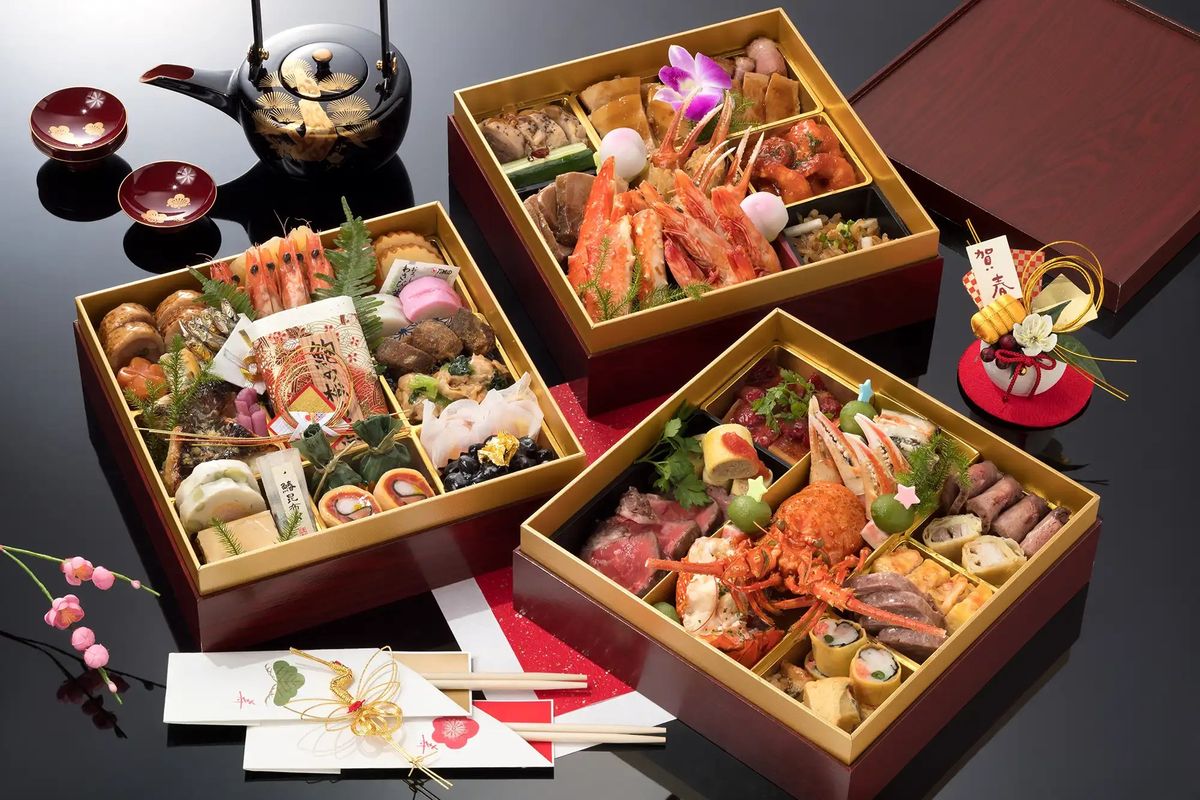
OSECHI RYORI: Enjoying and Sharing New Year's Special Foods
With the year coming to a close, everyone is rushing around to tie up loose ends such as cleaning the house and paying off debts. However, amidst the chaos, there is a glimmer of relaxation and enjoyment in the form of New Year's Osechi Ryori. Originally, Osechi Ryori was referred to as "seasonal festive occasion food" and was enjoyed on various occasions throughout the year. Nowadays, it is specifically associated with the beautifully arranged and specially prepared dishes enjoyed during the most significant holiday of the year – the New Year's holiday which typically lasts for 3 to 5 days. Traditionally served in tiered lacquered boxes designated for the New Year's festivities, Osechi Ryori served as an offering to the divine spirits believed to visit households during this time, as well as a symbol of the desire for happiness and prosperity in the upcoming year. Discovering the intricate details and symbolic meanings behind these dishes can add an extra level of joy to the process of preparing and assembling your New Year's feast.
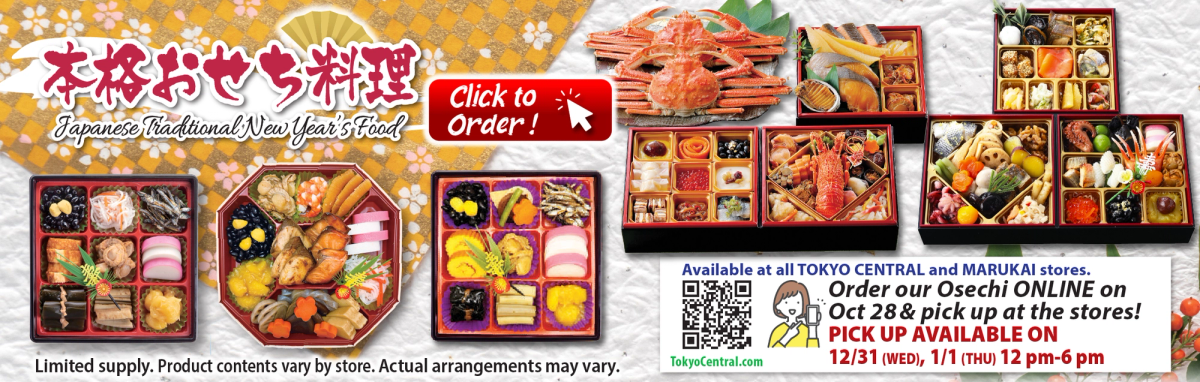
The Meaning Behind Each Ingredient
Each ingredient carries an auspicious meaning, and the names of many often have a pronunciation that lends itself to two or more interpretations.
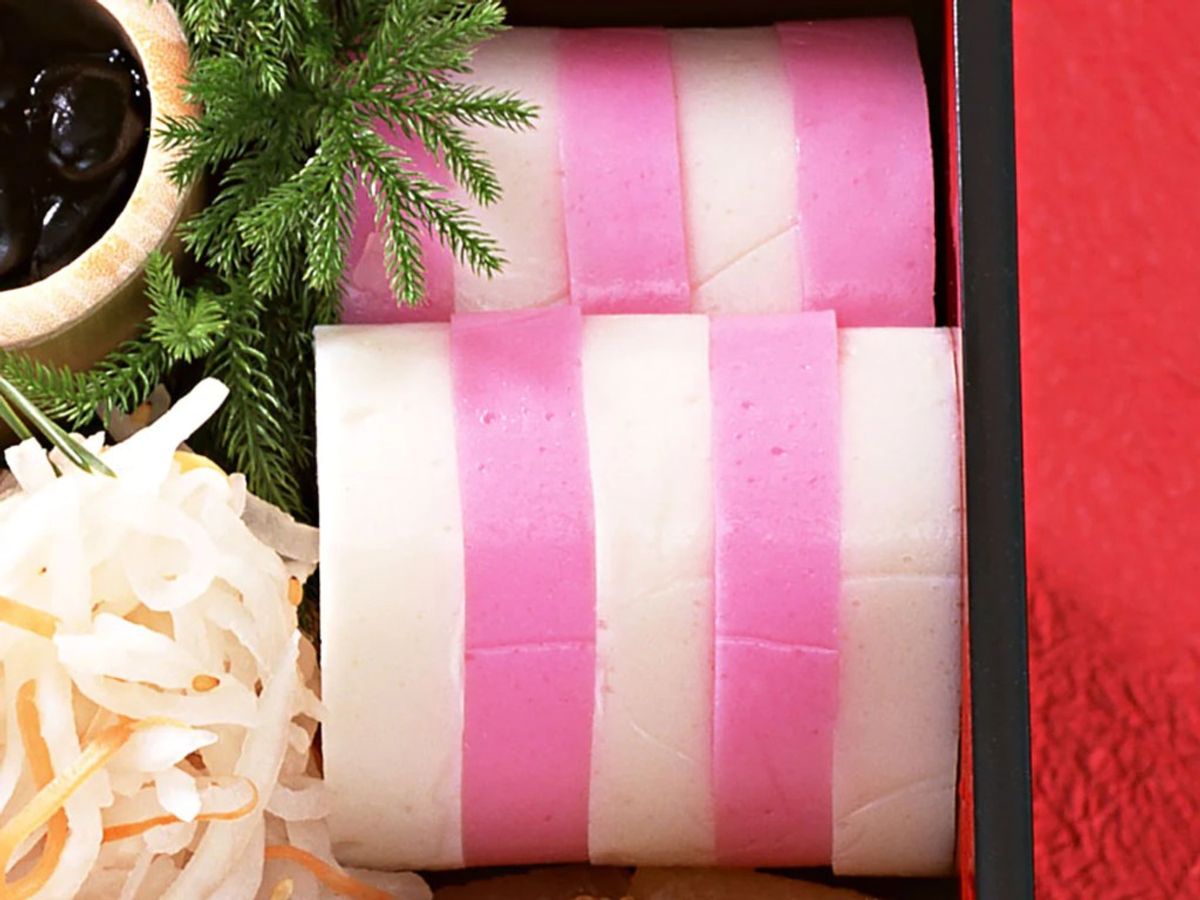
KOUHAKU KAMABOKO
Red and White Steamed Fish Cakes
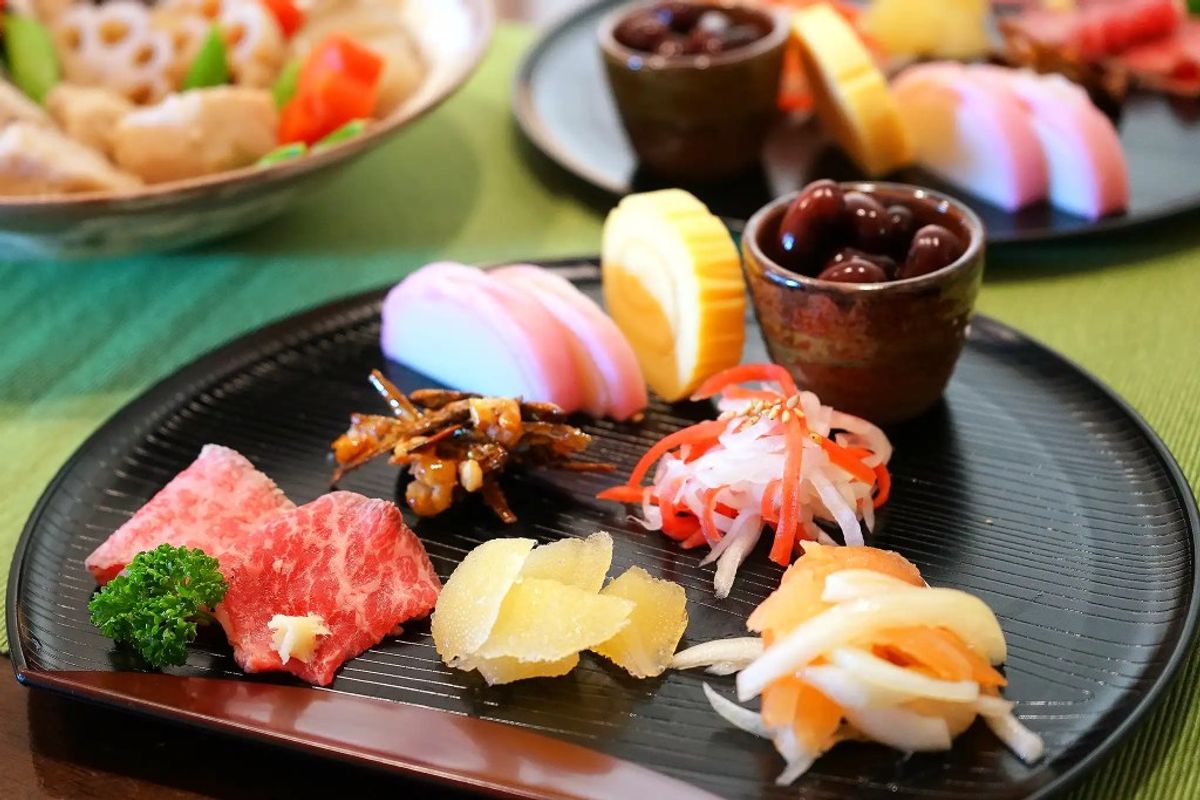
The red (Kou – in reality, pink), stands for felicity, and the white (Haku) represents sacredness. The shape of the half-circle kamaboko resembles the first sunrise of the New Year from the horizon. Red and white represent the rising sun and Japan's flag and popular colors in other New Year's decorations, both edible and ornamental.
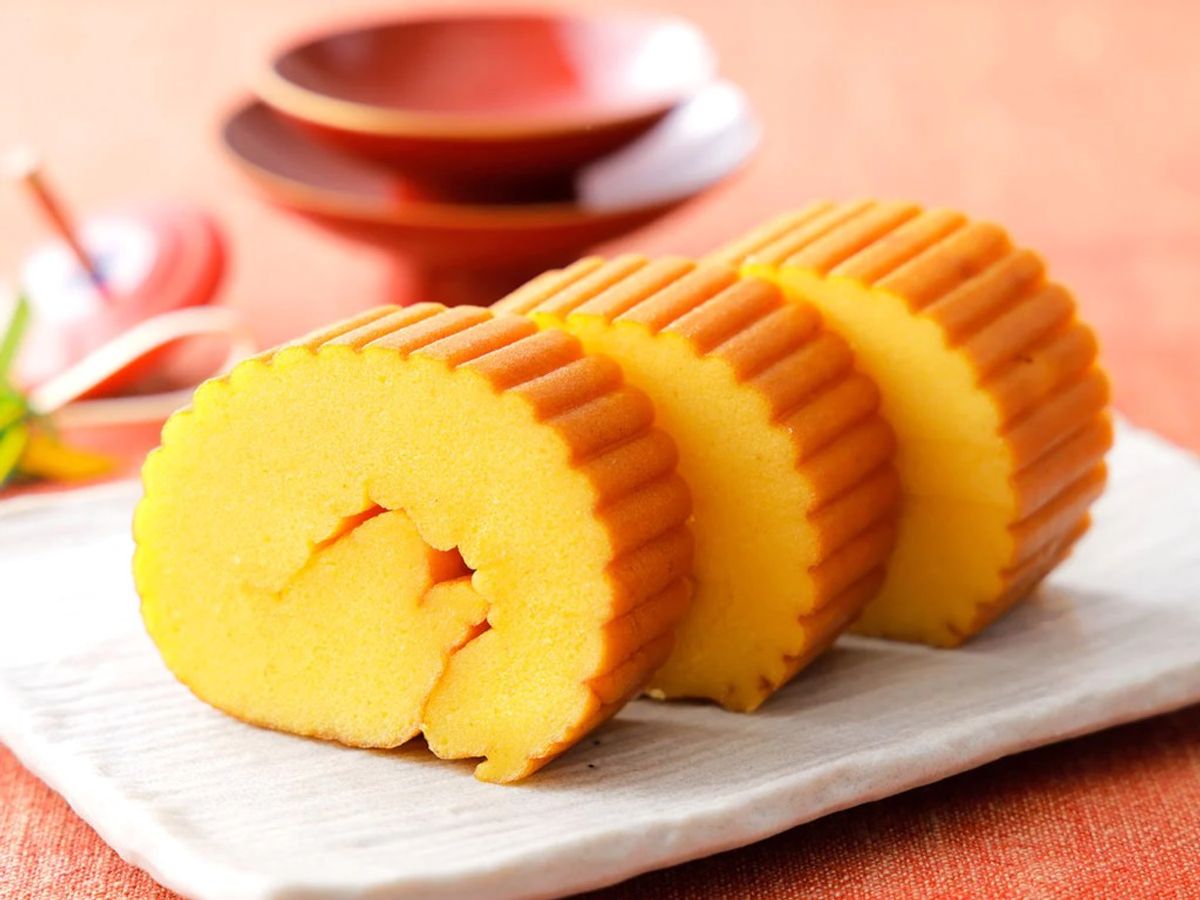
DATEMAKI
Sweet Rolled Omelet Mixed with Fish Paste
A thick omelet made of egg and fish paste is rolled into a spiral shape. The shape of Datemaki looks like rolled up scrolls (makimono) and represents a wish for improving academic skills.
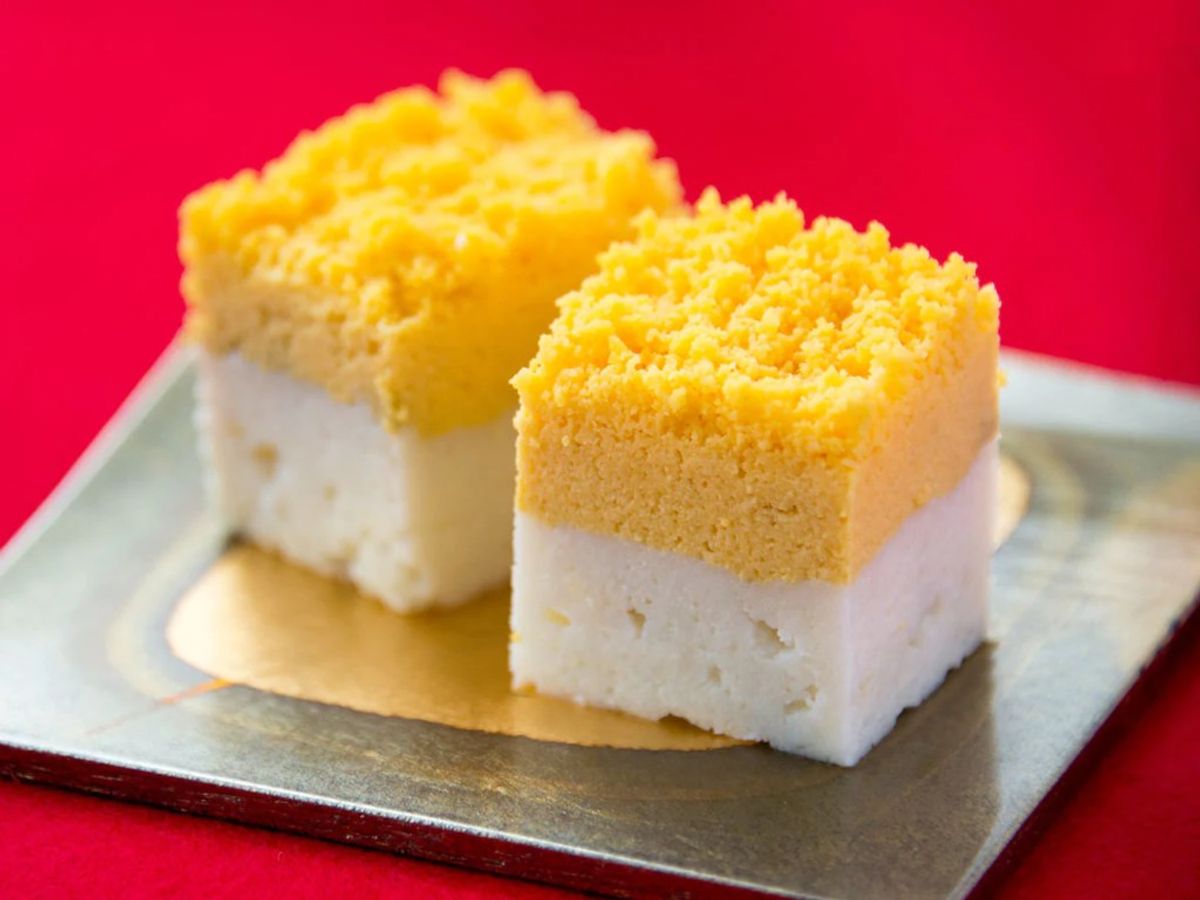
NISHIKI TAMAGO
Sweet Steamed Layered Egg Yorks and Whites
A beautiful bi-colored egg symbolizes prosperity, with the yellow yolks symbolizing gold, and the egg whites symbolizing silver. Nishiki is a play on words: Usually, the kanji 二色 (bi-colored) is pronounced "nishoku" but also can be pronounced "nishiki" the same as 錦, expensive textile brocade.
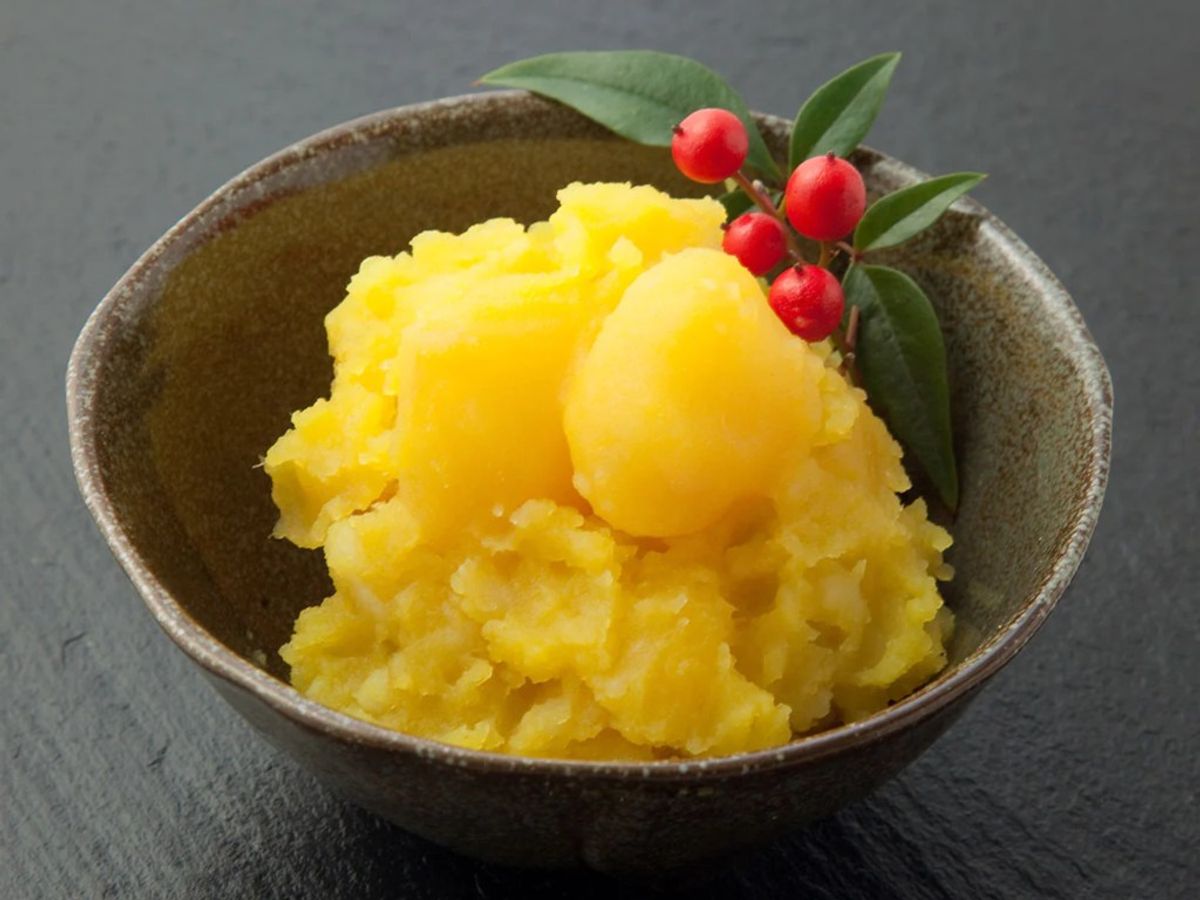
KURI KINTON
Pureed Sweet Potato with Candied Chestnuts
This beautiful yellow color dish is made of Japanese sweet potato puree mixed with candied chestnut chunks or whole chestnuts. At the beginning of the year, eating something yellow, which represents "gold," is believed to bring good luck and prosperity.
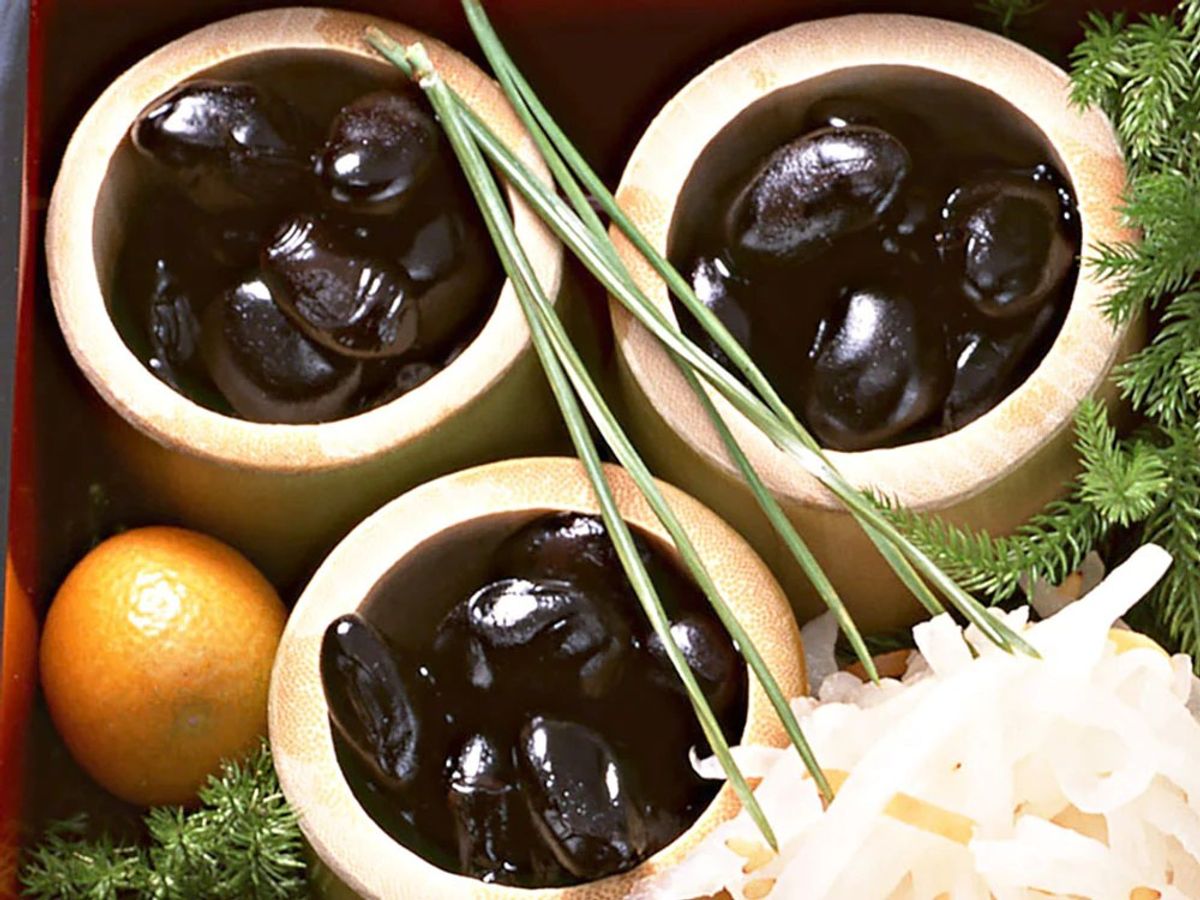
KUROMAME
Sweet Simmered Black Soybeans
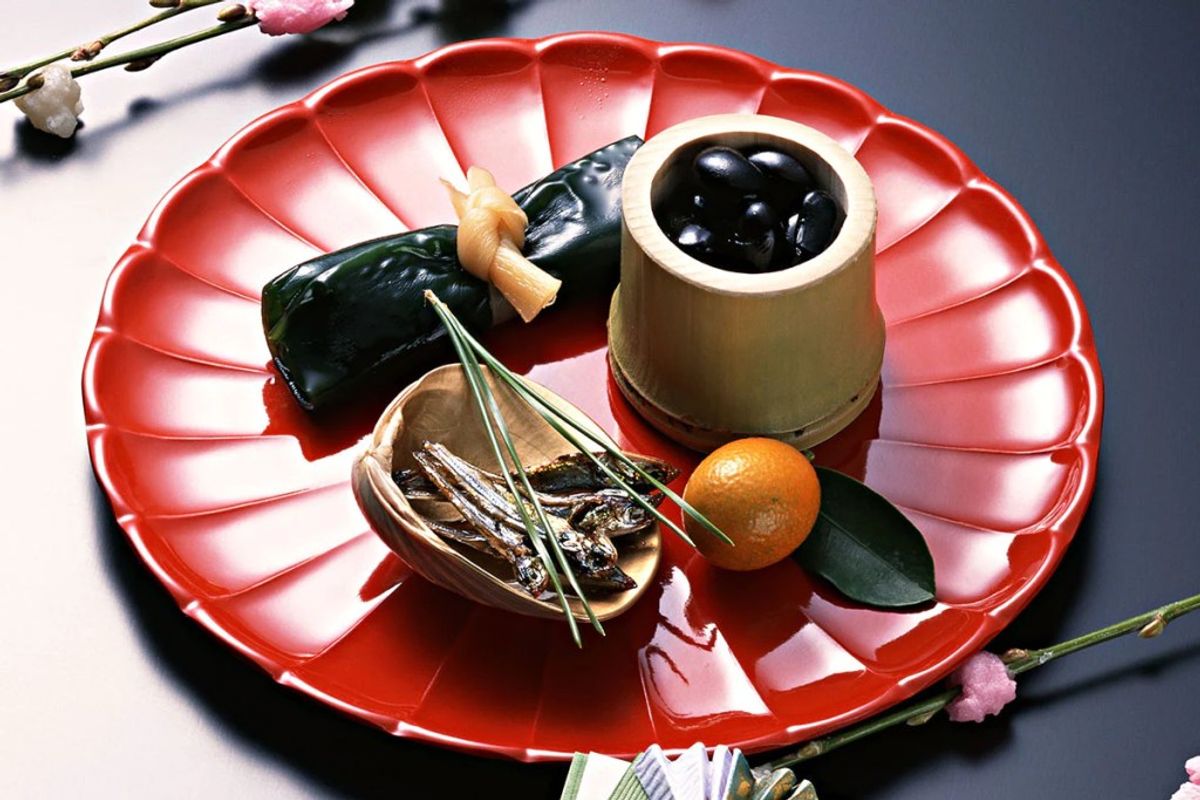
Black soybeans are simmered in sweet syrup with a hint of soy sauce. It is eaten to wish for diligence, hard work, and the health of the family since both 豆 (beans) and まめ (diligent) have the same sound "Mame". In addition to that, black is said to ward off evil spirits lurking in the New Year
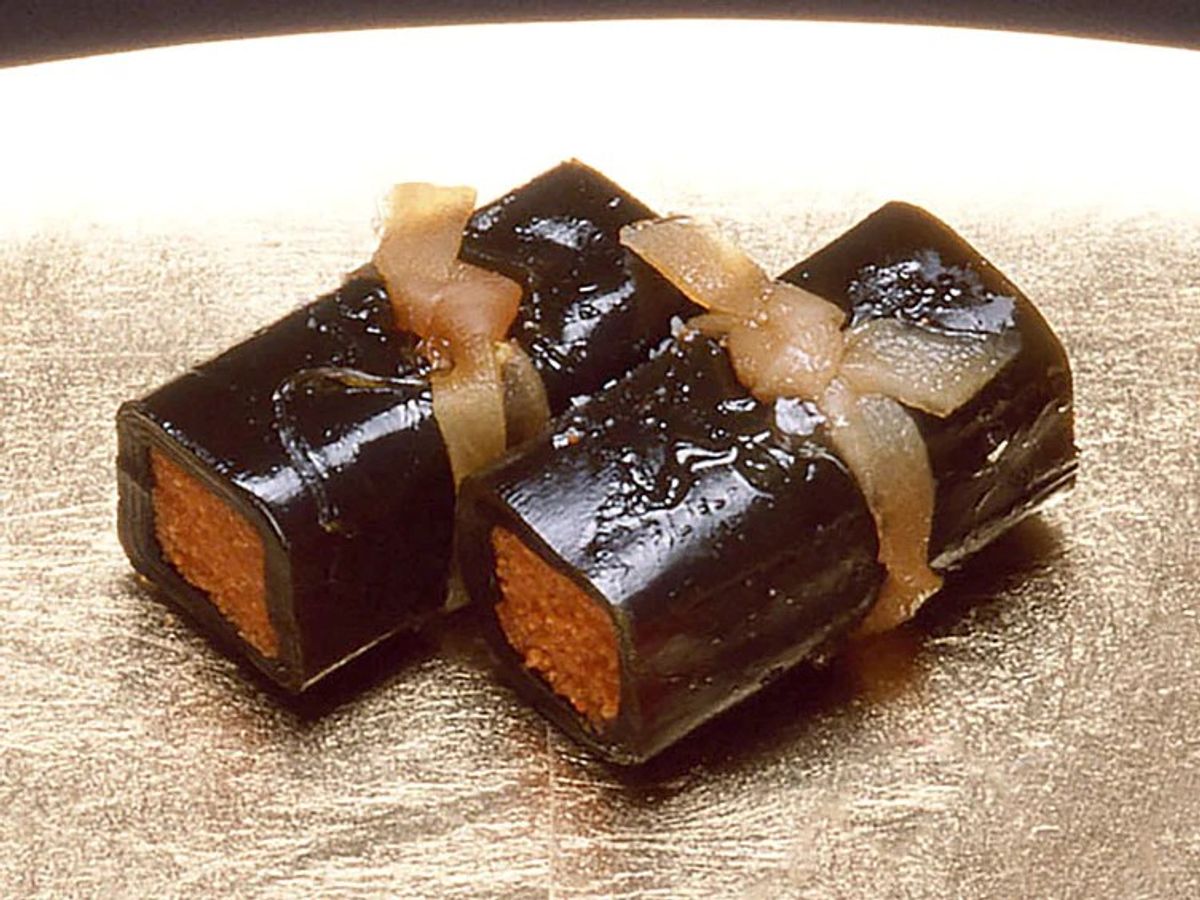
KOBU(KONBU) MAKI
Rolled Kelp Simmered in Sweet Soy Sauce
Kelp rolls are made with fish such as herring, salmon, or smelt in the center, tied with dried gourd ribbon, and simmered for a long time in sweet soy sauce. The word 昆布 "kobu" rhymes with よろこぶ "yorokobu" (to be joyful). 子生 is also pronounced "Kobu" which means "to give birth to a child," in the wish for the prosperity of offspring.
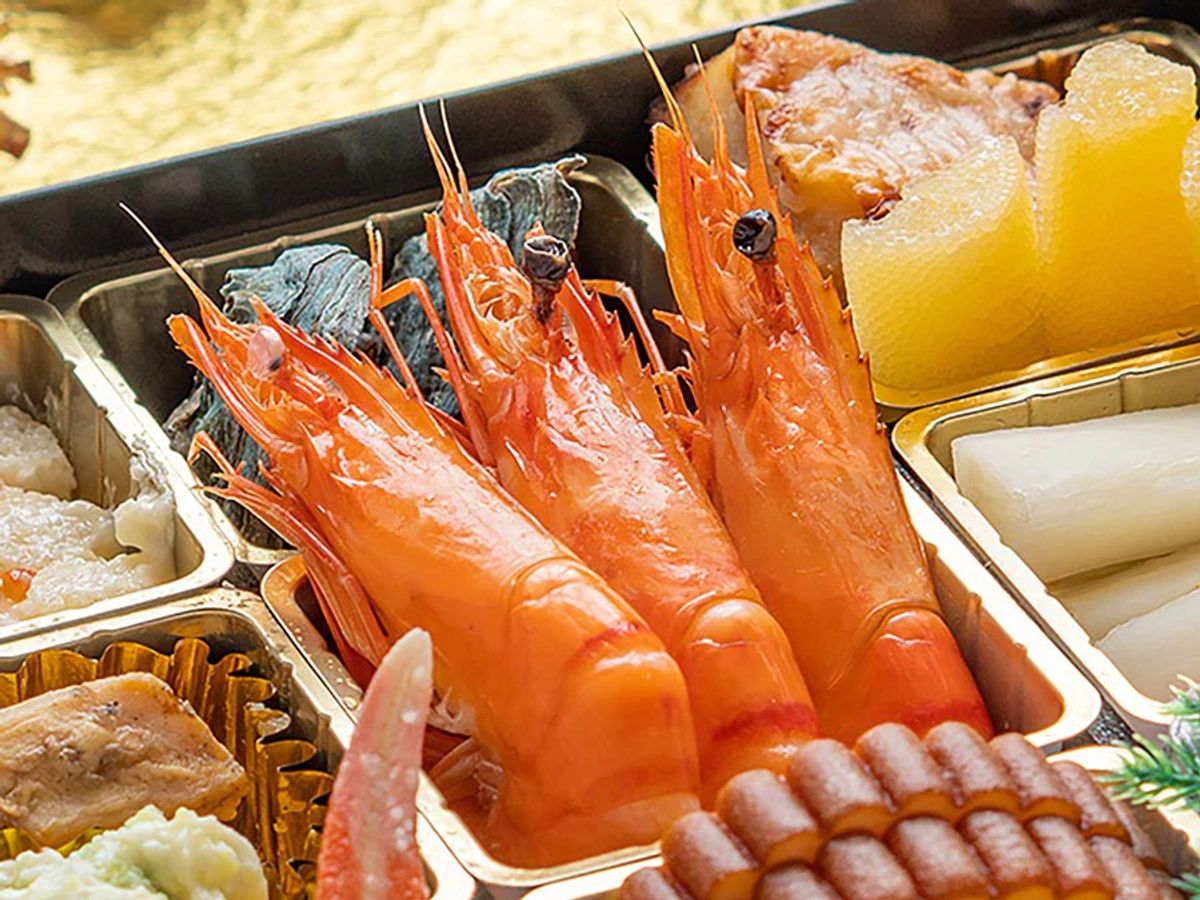
EBI
Shrimp / Lobster
The long antennae and curved backs of shrimp, prawns, and lobsters represent elders and symbolize health and longevity. Usually, cooked with shell and head simmered in a sweet and savory broth or broiled. Their red and white coloring bodies make them a gorgeous stand-out among the other foods in the Jubako box.
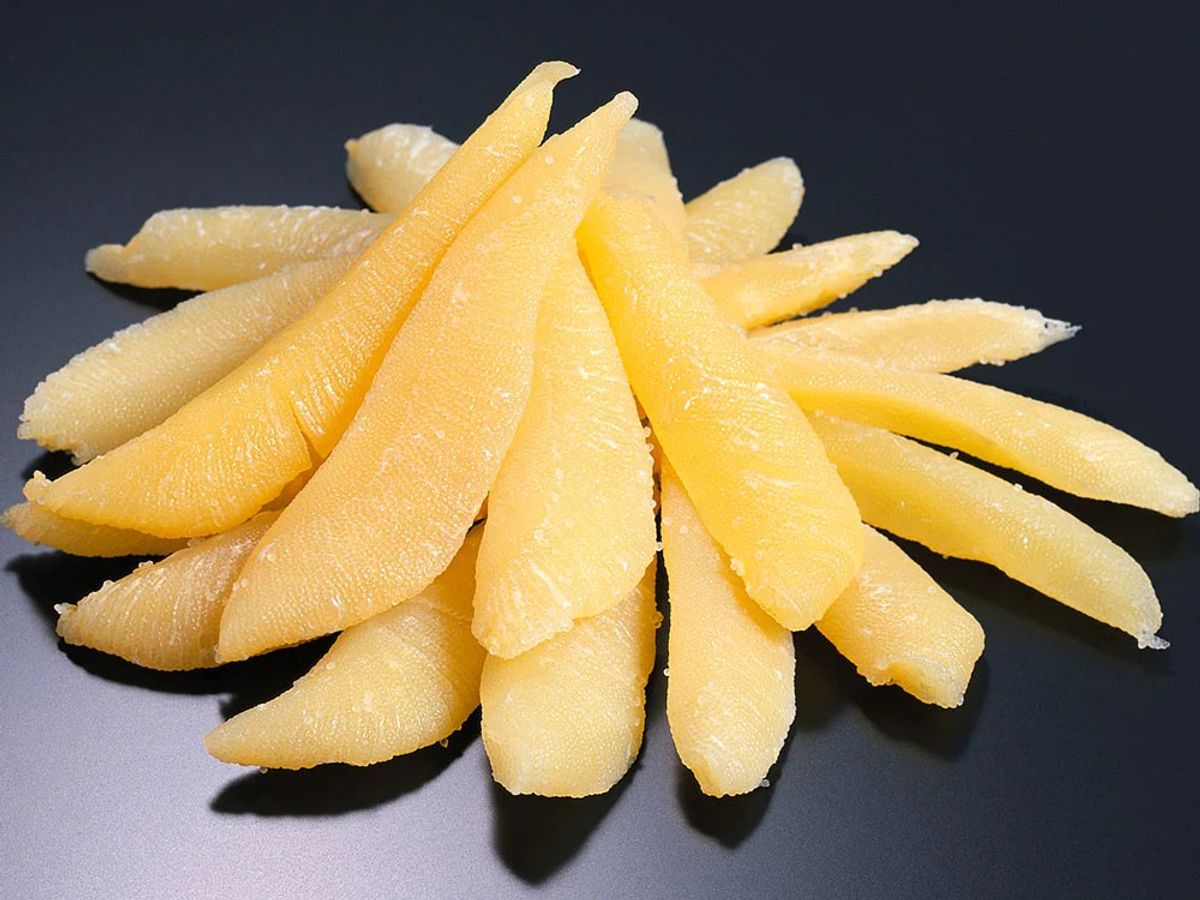
KAZUNOKO
Herring Roe
"Kazu" means number and "Ko" means children. Kazunoko symbolizes the wish to be blessed with children because herrings lay many eggs. In the past, salted or dried were the common types of herring roe, but due to the time-consuming nature of the process, seasoned herring roe, which can be eaten as is, is now the mainstream
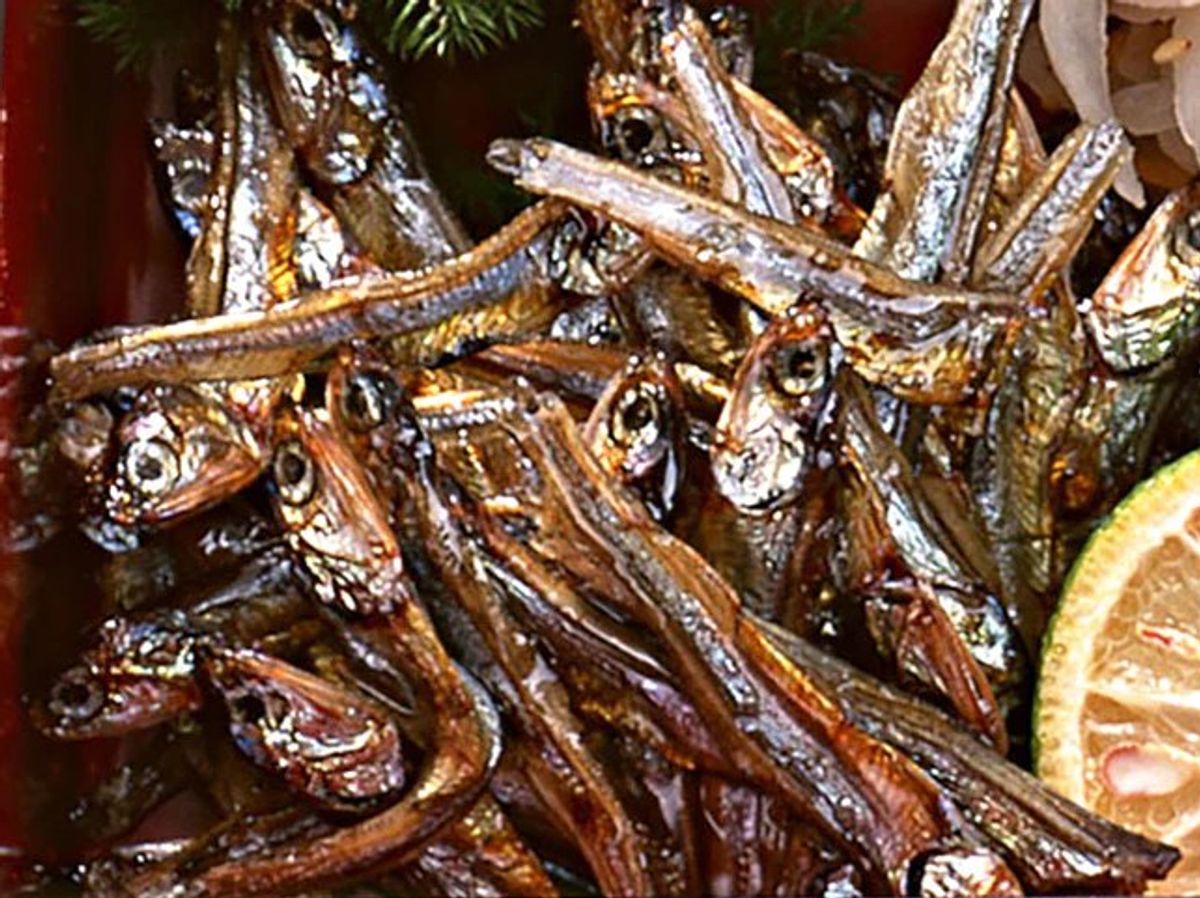
TAZUKURI
Candied Dried Sardine
This dish is a small, dried sardine roasted dry and then caramelized with mirin (sweet sake), sugar, and soy sauce. Tazukuri literally means “to make rice paddy” as sardines were used historically to fertilize rice fields.
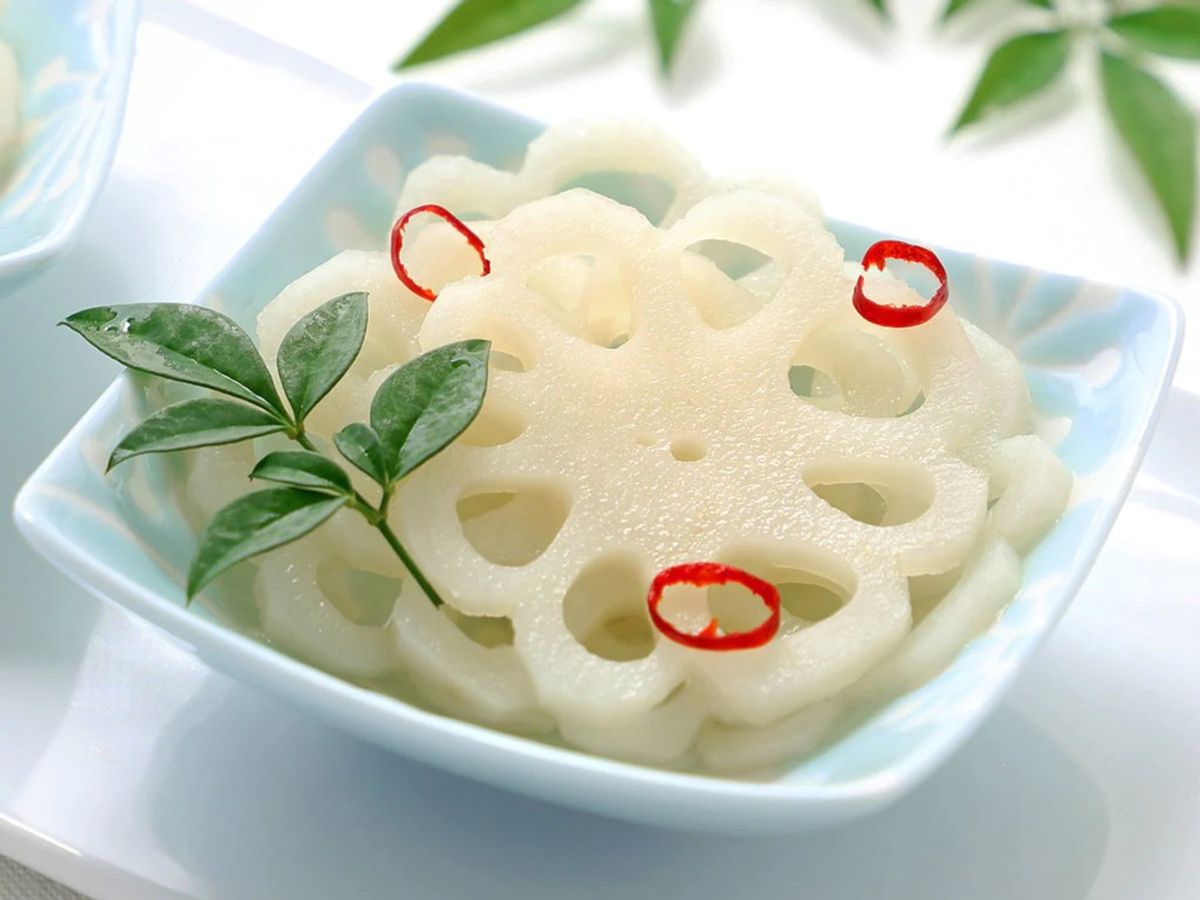
RENKON
Lotus Root
Renkon is regarded as a lucky vegetable because it has lots of holes, which symbolizes the ease of looking through to the future. Renkon is one of the ingredients for the "Onishime" traditional braised vegetables, a staple of the family Osechi dish. Also "Subasu" sweet vinegar marinated lotus root is popular for the Osechi.
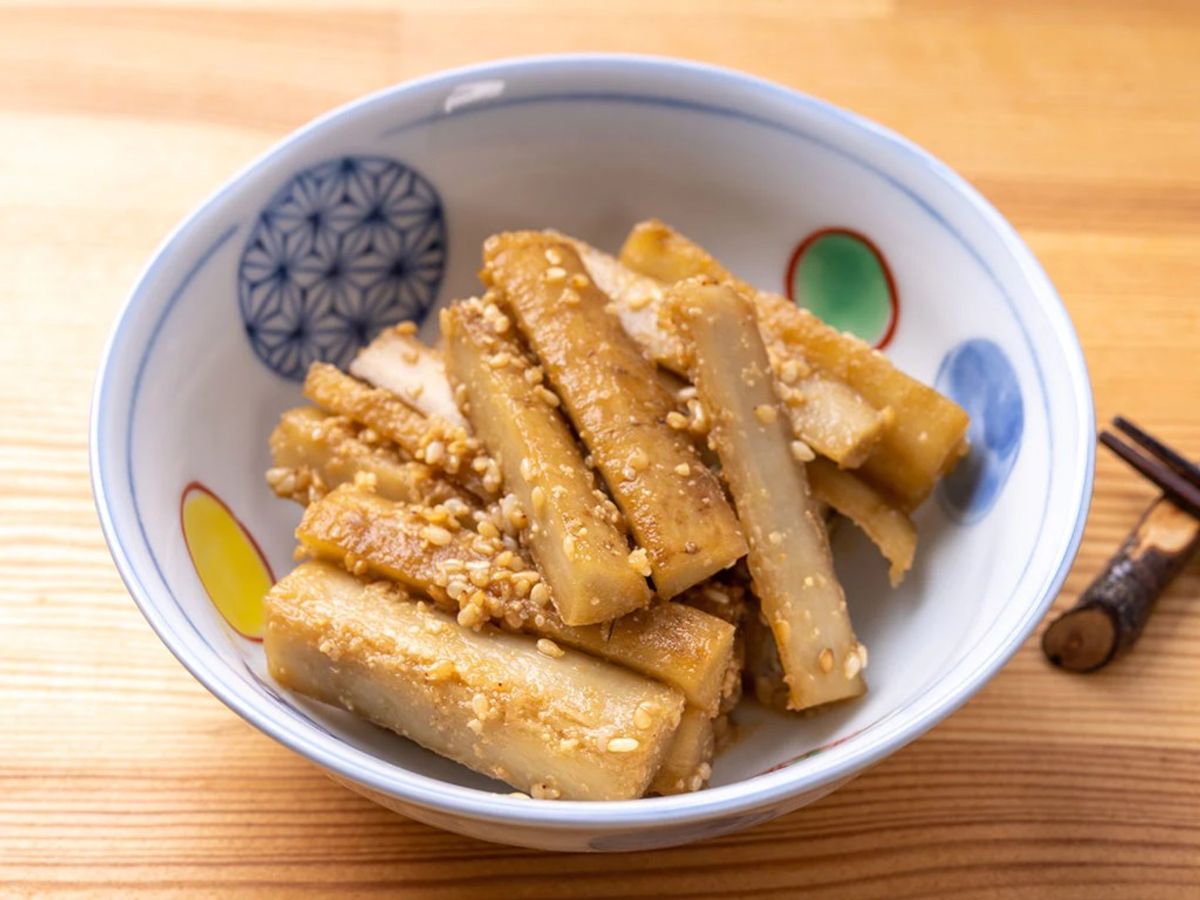
GOBO
Burdock Root
Growing long and deep into the earth, the burdock root symbolizes both the flourishing and stability of the family in the coming year. Gobo is using for several Osechi dishes such as "Onishime" braised vegetables, "Tataki Gobo" pounding burdock with seasoned sesame, and family staple "Kinpira Gobo" soy-flavored shredded burdock and carrot.
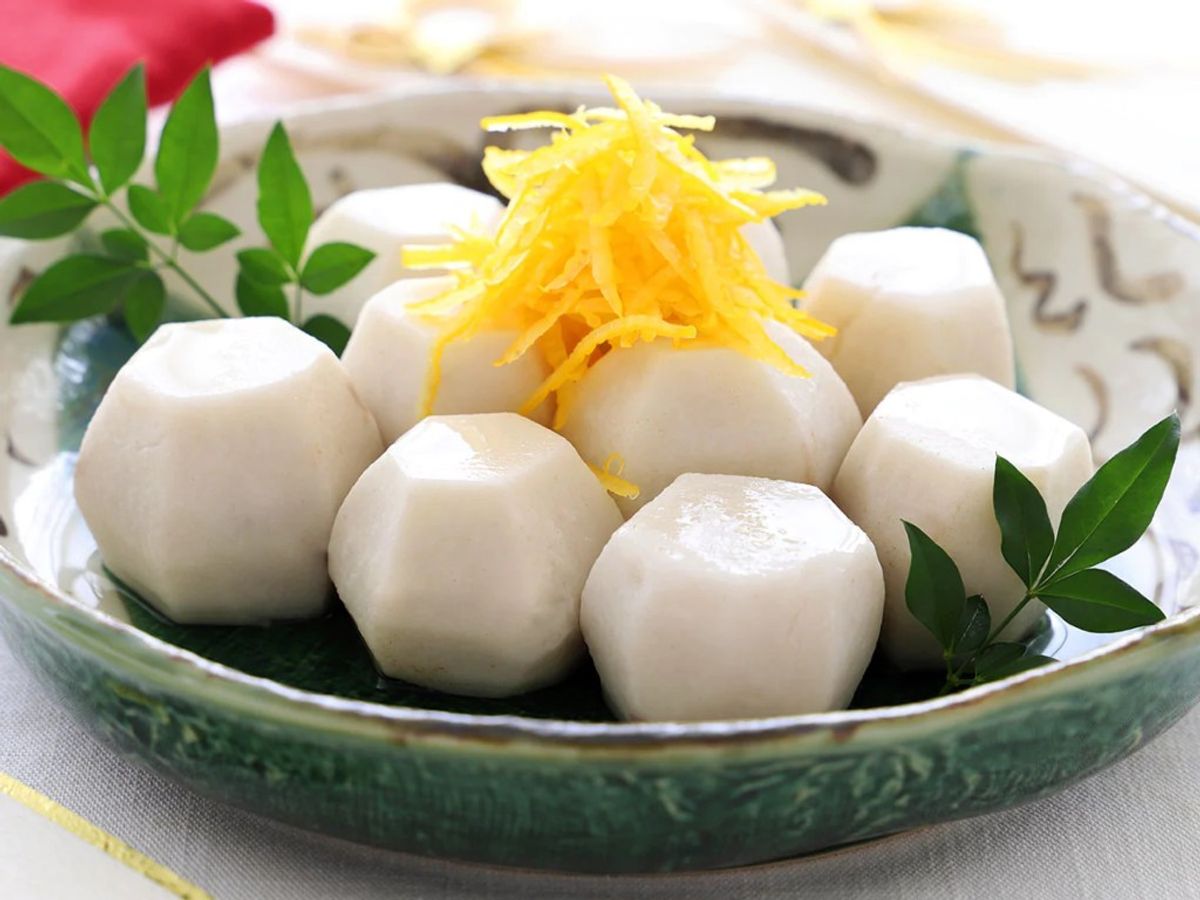
SATOIMO
Japanese Taro
The taro root grows by baby buds sprouting off the parent plant, and this represents a wish for a fertile future. Along with other root vegetables for the "Onishime", cooking alone for 白煮 "Shirani" white color braised taro and the necessary ingredient for the "Ozouni" soup with mochi in some regions.
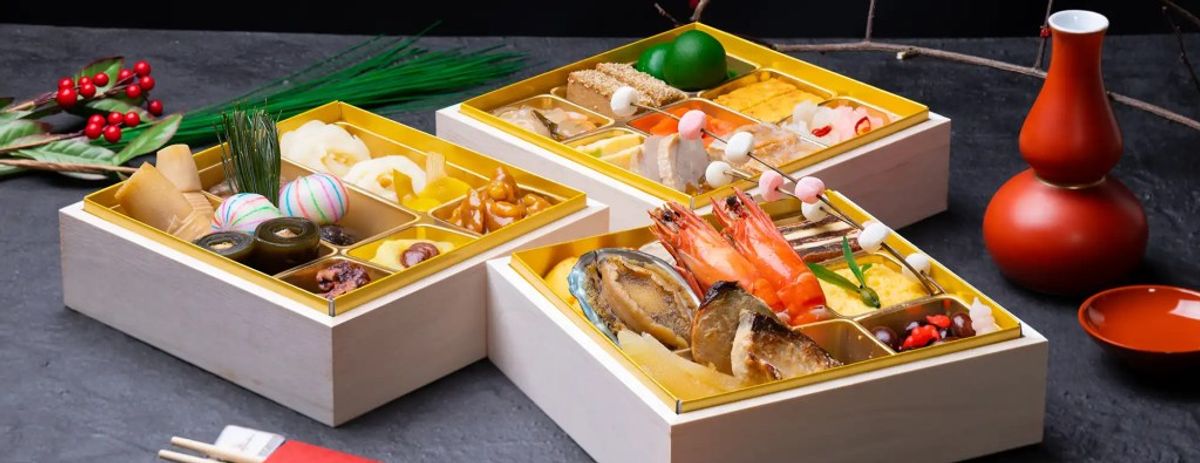
Arrangement and Presentation
The traditional method for presenting and storing Osechi Ryori is called "Jubako" a lacquered box with a top lid, which may have three to five tiers. The boxes, chock-a-block with beautifully arranged goodies, are presented stacked, then one by one the tiers are placed on the table, revealing the treasures inside. Osechi ryori is traditionally eaten the first three days of New Year, all the tiers are neatly stacked together, and the lid is placed after each meal and ready for the next meal! The stacking of the layers, "Kasaneru" also embodies the meaning of layering or stacking happiness upon happiness, a thought surely not far from your mind as you are enjoying your meal!Generally, the top tier, Ichi-no-ju, contains appetizers; the second tier from the top, Ni-no-ju, holds vinegared dishes, roasted or grilled items, and skewers of meat and fish; the third, San-no-ju, contains braised or stewed food. But there are as many varieties of dishes, ways of arranging, and ways of presenting as there are prefectures in Japan! And each household has its own special style as well, meaning that there are no hard and fast rules that must be obeyed. Feel free to arrange things as you wish—with or without a Jubako!
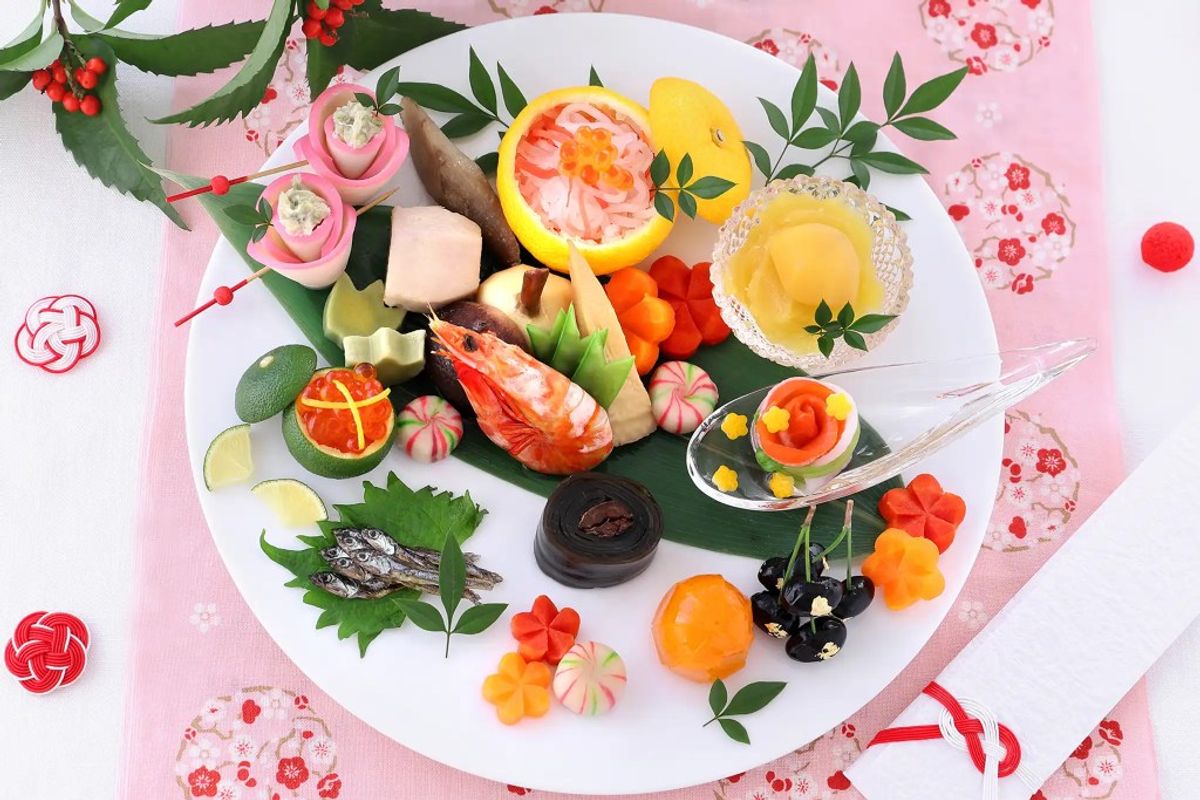
Here are a few examples of how you might want to display your own version of New Year's Osechi Ryori!